There’s something about a Christmas trifle recipe that screams “I’ve got my life together” at holiday gatherings. The layers look fancy, the glass bowl shows off your hard work, and honestly? It’s way easier than most people think. I’ve been making trifles for Christmas dinner for years, and they never fail to impress—even though I usually assemble mine the night before while binge-watching holiday movies. Let me show you how to create a show stopping trifle that tastes as incredible as it looks 🙂
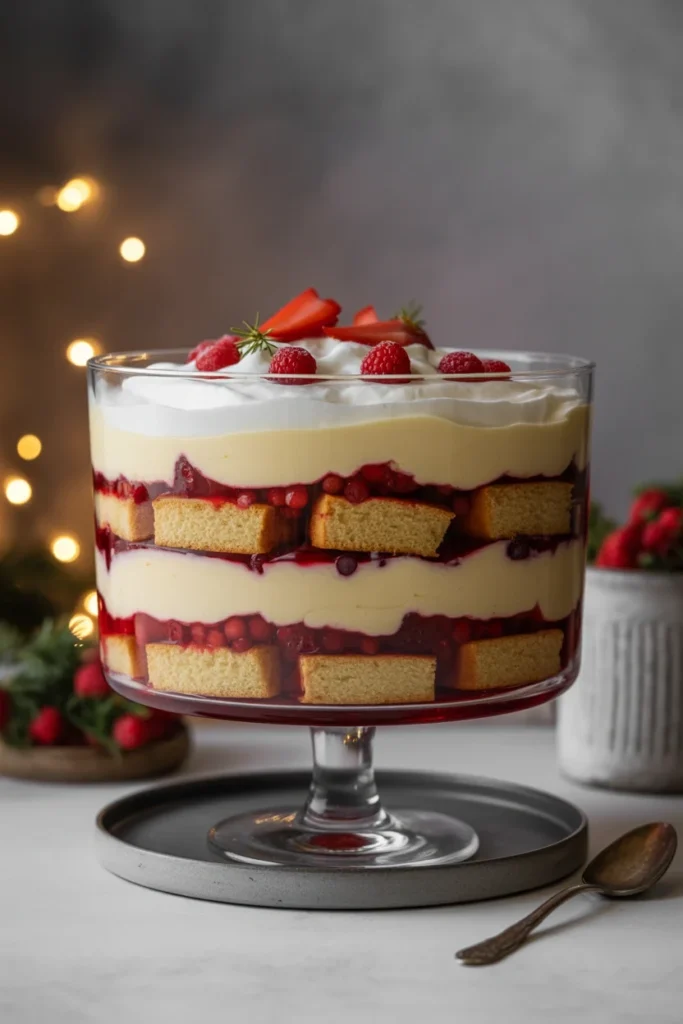
Christmas Trifle Recipe
Course: Dessert, Holiday DessertCuisine: British, EnglishDifficulty: Easy12
servings30
minutes320
kcalThis classic Christmas trifle features beautiful layers of moist cake, creamy custard, fresh fruit, and fluffy whipped cream in a stunning glass bowl. Perfect for holiday entertaining, it's made ahead, feeds a crowd, and always impresses guests. Customize with your favorite fruits and flavors for a dessert that's both elegant and easy!
Ingredients
- Cake Layer:
1 pound cake or 24 ladyfingers
½ cup sherry or fruit juice for soaking
- Custard/Pudding Layer:
2 packages (3.4 oz each) instant vanilla pudding
4 cups cold milk
OR homemade custard (2 cups)
- Fruit Layer:
3 cups mixed berries (strawberries, raspberries, blueberries)
1 can (15 oz) cherry pie filling or mandarin oranges
- Whipped Cream:
2 cups heavy whipping cream
¼ cup powdered sugar
1 teaspoon vanilla extract
- Garnish:
Fresh berries
Chocolate shavings
Mint leaves
Sliced almonds (optional)
Directions
- Cut pound cake into 1-inch cubes. If using ladyfingers, keep whole or halve lengthwise.
- Prepare instant pudding according to package directions using 4 cups milk. Refrigerate until set (about 5 minutes).
- Wash and prepare fresh fruit. Drain canned fruit thoroughly if using.
- In large bowl, whip heavy cream with powdered sugar and vanilla until stiff peaks form.
- In clear 3-quart trifle bowl or glass bowl, arrange half the cake cubes on bottom.
- Drizzle half the sherry or juice over cake, allowing it to soak in.
- Spread half the pudding/custard over soaked cake layer, smoothing to edges.
- Add half the fruit in an even layer over custard.
- Repeat layers: remaining cake, soaking liquid, custard, and fruit.
- Top entire trifle with whipped cream, spreading or piping decoratively.
- Garnish with reserved berries, chocolate shavings, mint leaves, or almonds.
- Cover carefully with plastic wrap and refrigerate at least 4 hours or overnight.
- Serve chilled, scooping through all layers for each portion.
Recipe Video
Notes
- Make 1 day ahead for best flavor—layers meld beautifully overnight.
Add whipped cream topping day of serving for freshest appearance.
Use any combination of berries based on availability and preference.
For non-alcoholic version, substitute fruit juice for sherry.
Individual servings can be assembled in glass cups or mason jars.
Keeps refrigerated 2-3 days, though best within first 24 hours.
Use stale or day-old cake for better liquid absorption.
Why Christmas Trifle is the Ultimate Holiday Dessert
The Christmas trifle is a British tradition that’s conquered holiday tables worldwide, and for good reason. You get multiple textures and flavors in one dessert—soft cake, creamy custard or pudding, fresh fruit, and whipped cream all layered in gorgeous, visible stripes. According to BBC Good Food, trifle has been a Christmas staple in Britain since the 18th century.
What makes this Christmas trifle recipe so brilliant for entertaining? You make it ahead, it feeds a crowd, and it looks impressive without requiring pastry skills or precision baking. Plus, it’s endlessly customizable to your taste preferences and dietary needs.
IMO, trifle is the smartest dessert choice for busy hosts. While everyone else stresses about last-minute desserts, your trifle sits in the fridge getting better as the flavors meld. That’s a win in my book.
Understanding the Classic Trifle Layers
The Foundation: Cake Layer
Every great Christmas trifle recipe starts with cake as the foundation. Traditional versions use sponge cake or ladyfingers, but I’ve experimented with everything from pound cake to brownies. The key is choosing a cake that absorbs liquid without completely falling apart.
I prefer store-bought pound cake for ease, but homemade sponge cake adds a special touch if you have time. Cut your cake into 1-inch cubes for easy serving and good liquid absorption. The cake needs to be sturdy enough to support the layers above while soft enough to blend with other components.
Ever wondered why some trifles taste better than others? It’s all about the cake-to-cream ratio and how well your cake soaks up the flavoring liquid. Get this right, and you’re golden.
The Flavor Boost: Soaking Liquid
Here’s where your Christmas trifle gets its flavor depth. You’ll soak the cake layer with liquid—traditionally sherry or brandy, but fruit juice works beautifully for non-alcoholic versions. I use a combination of sherry and fruit juice for balanced flavor that’s boozy without being overwhelming.
Don’t skip this step thinking the cake is fine dry. The soaking liquid is what transforms ordinary cake into something special. It adds moisture, flavor, and helps all the layers marry together. Pour it generously but don’t drown your cake—you want damp, not soggy.
For family-friendly versions, try:
- Orange juice with vanilla extract
- Cherry juice from canned cherries
- Cranberry juice with almond extract
- Apple cider with cinnamon
The Creamy Layer: Custard or Pudding
The creamy component makes or breaks your Christmas trifle recipe. Traditional British trifles use homemade custard, while American versions often use instant pudding for convenience. I’ve gone both routes, and honestly? Both work beautifully if executed properly.
Homemade custard tastes richer and more elegant but requires careful cooking to prevent curdling. Instant pudding saves time and never fails, making it perfect for stress-free entertaining. I often use vanilla pudding as my base and add flavor extracts to customize it.
The custard layer should be thick enough to hold its shape but creamy enough to blend with other components. Too thin and it seeps everywhere; too thick and it feels gloppy. Aim for a consistency like thick yogurt—spreadable but substantial.
The Fruit Layer: Color and Freshness
Fruit brings brightness and cuts through the richness of your Christmas trifle. Traditional versions use berries, but holiday trifles often feature cranberries, cherries, or mandarin oranges for festive flair. I layer my fruit strategically—some mixed into the trifle, some saved for the top as decoration.
Fresh fruit looks beautiful but can make your trifle watery if it sits too long. I prefer a mix of fresh and preserved—canned cherries or mandarin oranges provide consistent quality and won’t weep liquid that ruins your layers. Drain canned fruit thoroughly before using.
Fruit combinations that work beautifully:
- Strawberries and raspberries (classic and stunning)
- Cranberries and oranges (festive and seasonal)
- Cherries and chocolate (decadent and rich)
- Mixed berries (colorful and balanced)
The Crowning Glory: Whipped Cream
The top layer of any Christmas trifle recipe is always whipped cream—and I’m talking real, proper whipped cream, not that stuff from a can. Heavy cream whipped with a bit of sugar and vanilla creates light, pillowy clouds that make people swoon.
Whip your cream to stiff peaks so it holds its shape for presentation. Under-whipped cream deflates and looks sad; over-whipped cream turns grainy and eventually becomes butter (yes, I’ve done this). Stop when you can pull the beaters out and peaks stand upright without drooping.
For extra stability, add 2 tablespoons of powdered sugar per cup of cream—it contains cornstarch that helps the cream hold longer. This matters if your trifle sits out during dinner service.
Assembling Your Christmas Trifle Like a Pro
Choosing the Right Dish
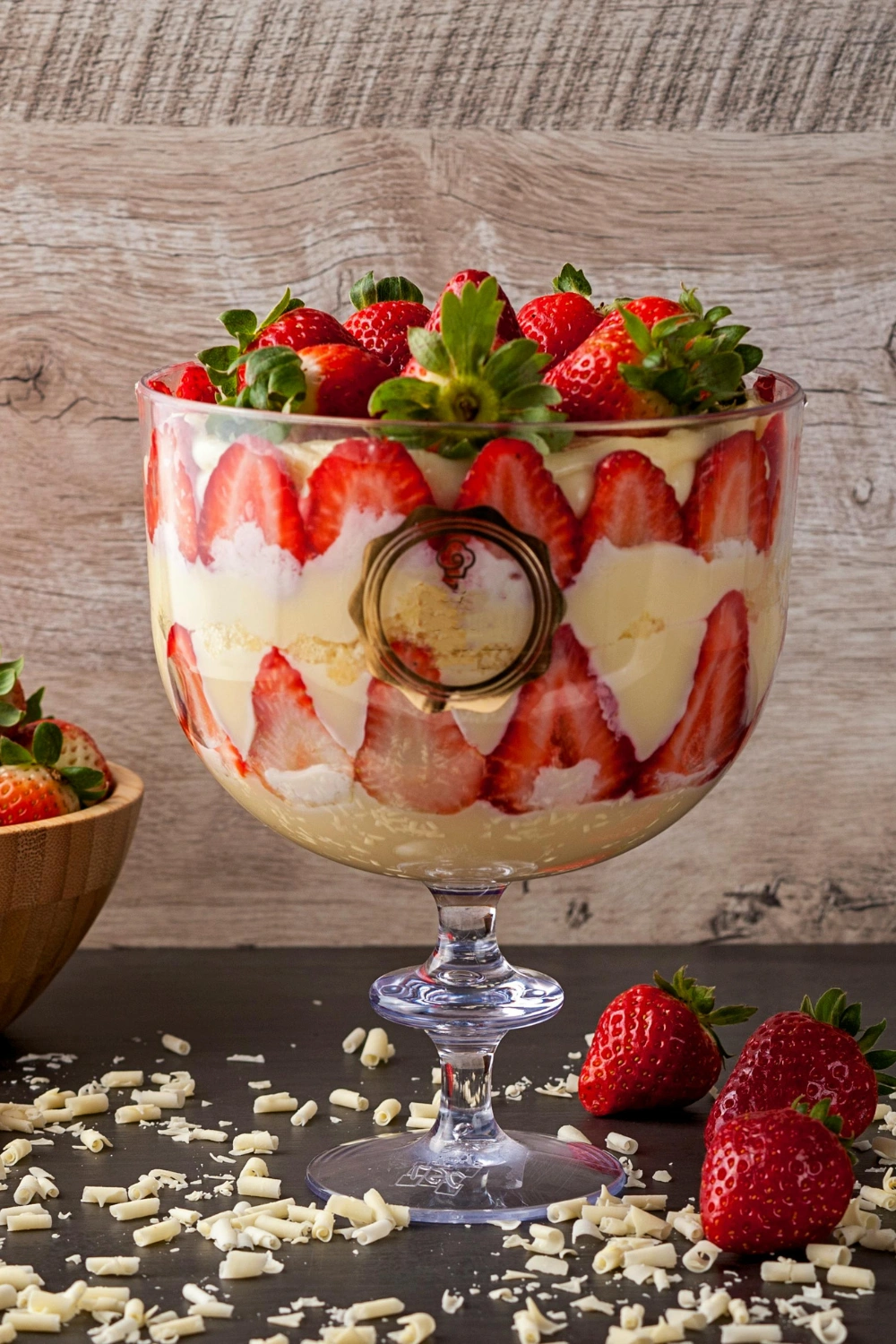
Presentation is huge with Christmas trifle, so your dish matters. Clear glass trifle bowls show off those gorgeous layers—that’s the whole point. I use a 3-quart trifle bowl for gatherings of 10-12 people. You can also use individual glass cups for a fancy plated dessert option.
If you don’t have a proper trifle bowl, any clear glass bowl works. Straight sides show layers better than curved ones, but curved bowls are fine too. Just avoid opaque dishes—you lose the entire visual impact of the layering.
Pro tip: Wipe the inside of your bowl with a damp paper towel before assembling. Messy smears on the glass ruin the presentation. According to Martha Stewart Living, clean glass and careful layering are keys to professional-looking trifles.
The Art of Layering
Here’s where your Christmas trifle recipe comes together. Start with half your cake cubes spread evenly across the bottom. Drizzle with soaking liquid, letting it absorb for a minute. Add half your custard/pudding, spreading to the edges. Layer half your fruit, then repeat everything once more.
I use an offset spatula to spread layers evenly to the edges—this creates clean horizontal stripes visible through the glass. Don’t worry about perfection in the middle layers; the top layer is what everyone sees first.
The key is even distribution. If you pile everything in the center, your trifle looks lumpy and unbalanced. Take your time spreading each layer edge to edge for professional results.
Timing Your Assembly
You can make your Christmas trifle up to 24 hours ahead, which is perfect for holiday entertaining. The layers need time to meld together, so making it the day before actually improves the final product. The cake absorbs moisture, flavors blend, and everything softens into cohesive deliciousness.
I assemble mine the night before, cover tightly with plastic wrap, and refrigerate. Add the whipped cream topping and final decorations the morning of serving—this keeps the cream fresh and perky. If you add cream too early, it can weep liquid or deflate.
For longer advance prep, you can make components 2-3 days ahead and assemble the night before. Make custard, prepare fruit, bake cake, and store everything separately. This spreads the work across several days.
Flavor Variations Beyond Classic
Chocolate Lovers’ Trifle
Transform your Christmas trifle recipe into a chocolate dream by using chocolate cake, chocolate pudding, and chocolate shavings. I layer this with fresh raspberries for a sophisticated flavor combination. The tartness of berries cuts through chocolate richness perfectly.
Add some chocolate liqueur to your soaking liquid for an adults-only version, or use chocolate milk for kids. Top with chocolate curls, cocoa powder, or chocolate-covered strawberries for maximum impact.
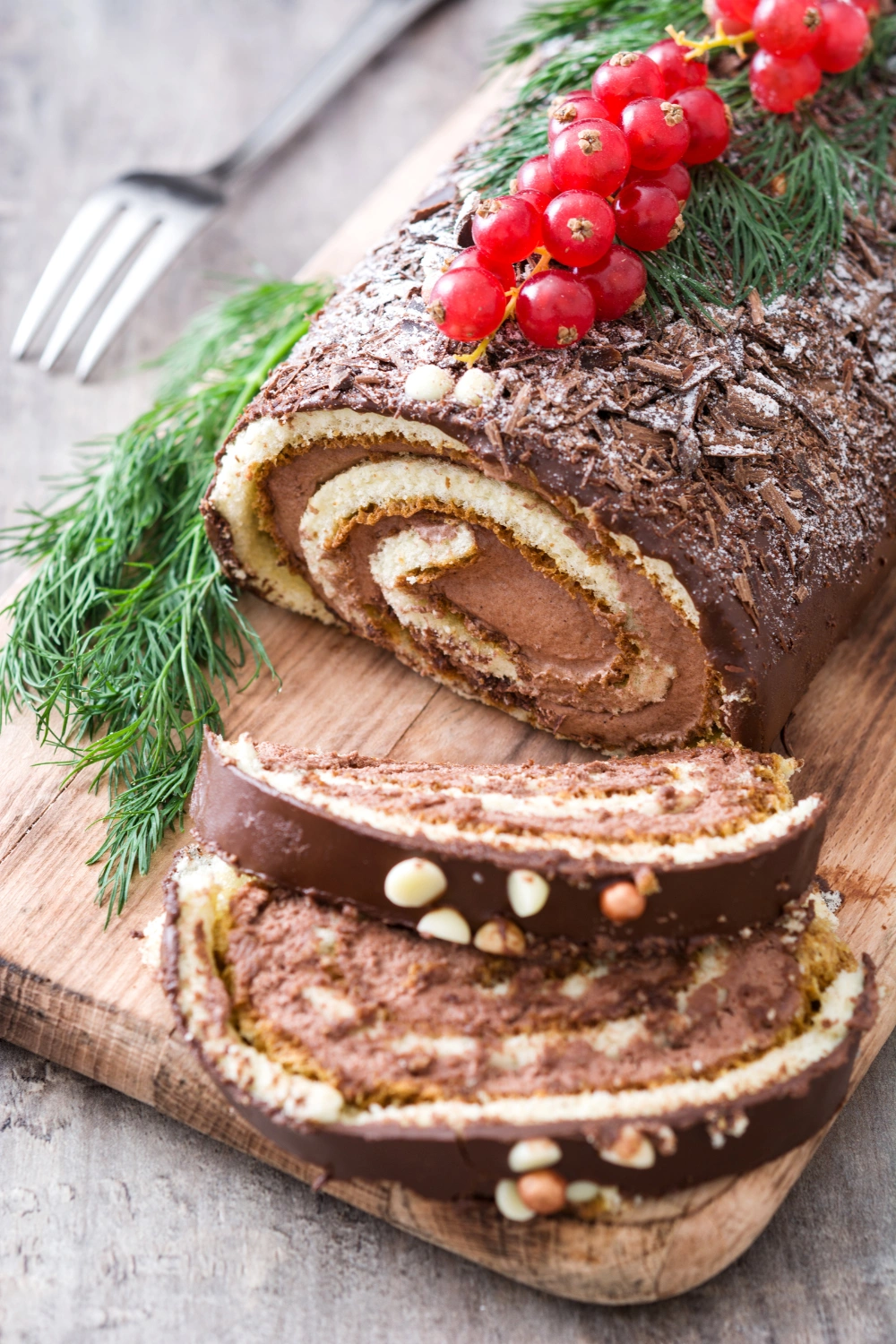
This version pairs beautifully with other chocolate desserts like Chocolate Yule Log Christmas Cake Recipe for a chocolate-focused dessert table.
Peppermint Bark Trifle
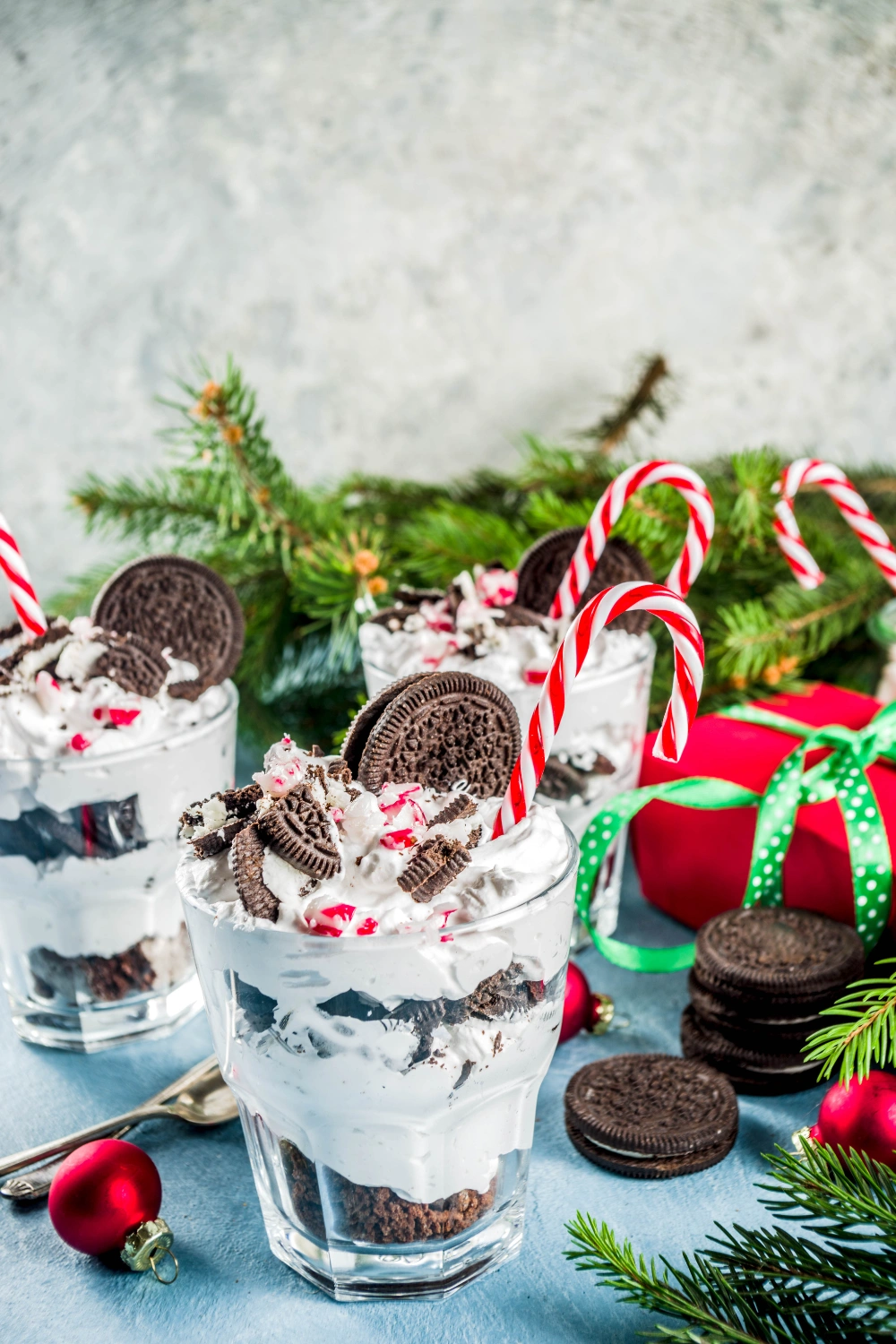
Channel those peppermint bark vibes into your Christmas trifle by adding crushed candy canes, peppermint extract to your cream, and white chocolate shavings. Use vanilla pudding and chocolate cake for contrast. This festive combination screams Christmas.
The key is balanced peppermint flavor—too much tastes like toothpaste (learned this the hard way). Start with 1/2 teaspoon peppermint extract and taste before adding more. You want a hint of mint, not a mouth full.
For more peppermint inspiration, check out Peppermint Bark Cookie Recipe to create a coordinated dessert spread.
Eggnog Trifle
Use eggnog as your soaking liquid and flavor your custard with nutmeg and rum extract for a Christmas trifle that tastes like drinkable eggnog in dessert form. This is my go-to for traditionalists who love classic holiday flavors.
Sprinkle freshly grated nutmeg over each layer for authentic eggnog flavor. Toast some pecans and scatter them throughout for textural contrast. Top with a generous dusting of cinnamon or nutmeg on the whipped cream.
Berry Christmas Trifle
For a lighter option, use angel food cake, vanilla pudding, and loads of mixed berries. This Christmas trifle recipe feels fresher and less heavy than chocolate versions—perfect after a big holiday meal. The bright red berries also look incredibly festive.
Use strawberries, raspberries, and cranberries for a red-themed Christmas trifle. Reserve your prettiest berries for the top decoration, and slice strawberries for easier eating in the inner layers.
Common Trifle Mistakes to Avoid
Soggy Bottom Syndrome
FYI, too much soaking liquid creates a soggy mess at the bottom of your Christmas trifle. While you want moist cake, you don’t want soup. I measure my liquid—about 1/4 cup per layer for a standard trifle—and pour evenly rather than dumping it all in one spot.
If your trifle does get too soggy (it happens), serve it in bowls rather than trying to spoon out neat portions. Call it “deconstructed trifle” and no one will question you. Sometimes soggy trifle tastes fine even if it doesn’t look perfect.
Runny Layers
Layers that won’t stay put usually mean your custard or pudding wasn’t thick enough. Make sure your pudding is fully set before assembling—give it the full refrigeration time the package suggests. Homemade custard needs to cool completely and thicken before you layer it.
If your layers are runny during assembly, pop the partially assembled trifle in the freezer for 10-15 minutes between layers to firm things up. This rescue technique has saved me more than once.
Bland Flavor
A boring Christmas trifle recipe usually lacks proper seasoning or soaking liquid. Don’t be shy with vanilla extract, almond extract, or liqueurs. The cake layer especially needs generous soaking to carry flavor throughout the dessert.
Taste your custard before assembling—it should taste slightly sweeter and more strongly flavored than you think necessary. Once combined with cake and cream, flavors mellow significantly. Better slightly too bold than disappointingly bland.
Deflated Whipped Cream
Whipped cream that deflates ruins the presentation of your Christmas trifle. Make sure you whip to stiff peaks and consider adding stabilizing ingredients like powdered sugar or cream cheese. Store your trifle covered but not touching the cream layer—I tent foil over the bowl to protect without smashing.
If your cream does deflate, you can carefully scoop it off, re-whip it with a bit more cream, and re-apply. Not ideal, but it works in emergencies.
Make-Ahead Strategy for Stress-Free Entertaining
Component Preparation Timeline
3 days before: Bake cake if making from scratch, prepare and cook custard, store both refrigerated separately.
2 days before: Prepare any cooked fruit components, toast nuts for garnish, make whipped cream stabilizer if using.
1 day before: Assemble entire trifle except whipped cream topping. Cover and refrigerate overnight.
Day of: Whip cream, add to trifle, and create decorative toppings. Your Christmas trifle recipe is ready with minimal day-of stress.
This timeline spreads the work across several days so you’re not overwhelmed. The actual assembly takes maybe 20 minutes when components are prepped—totally manageable even on busy Christmas day.
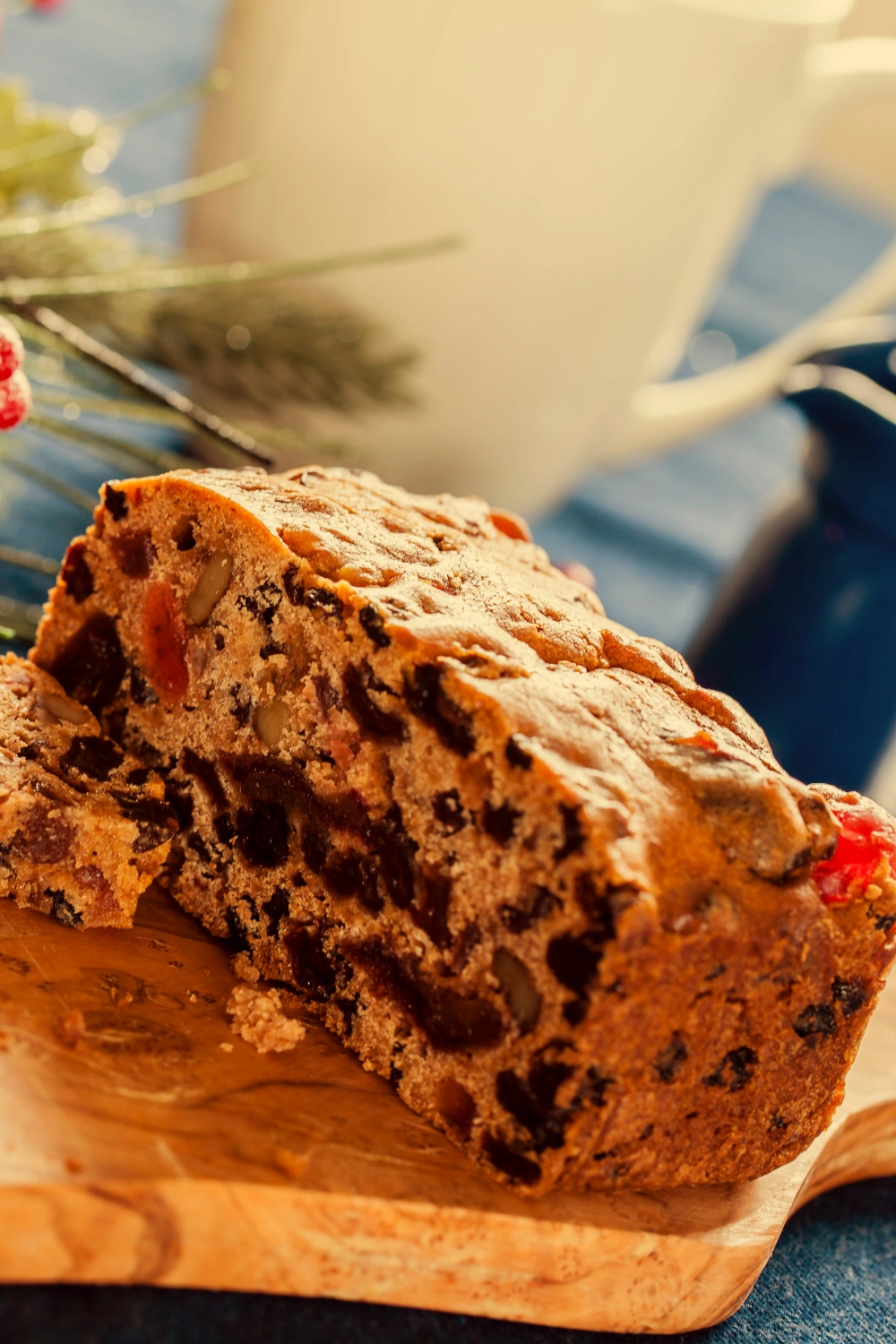
For more make-ahead holiday desserts, try Traditional Christmas Fruitcake Recipe which actually improves over weeks of aging.
Storage and Serving
Your assembled Christmas trifle stays fresh in the refrigerator for 2-3 days if properly covered. The flavors actually improve after the first day as everything melds together. Beyond three days, the fruit can get mushy and the cake can get too soggy.
Serve your trifle chilled, scooping generous portions into bowls or plates. Use a large serving spoon and go straight down through all layers—you want every spoonful to include cake, cream, fruit, and custard. The beauty of trifle is that perfect bite with all components together.
Individual portions can be assembled in glass cups or mason jars for a elegant plated dessert option. These look stunning and solve the serving dilemma of keeping layers intact.
Decorating Your Christmas Trifle
Classic Toppings
The top of your Christmas trifle recipe is your canvas. Traditional decorations include:
- Fresh berries arranged in patterns
- Chocolate shavings or curls
- Crushed candy canes for peppermint versions
- Toasted sliced almonds
- Fresh mint leaves for color
- Sugared cranberries (festive and gorgeous)
I like creating a wreath pattern with berries and mint around the edge, leaving the center clear to show the whipped cream. Simple but elegant and very Christmas-y.
Creative Presentations
For something different, try piping the whipped cream with a star tip for a fancy bakery look. Or create a winter scene with white chocolate “snow,” rosemary “trees,” and pomegranate “ornaments.” Get creative—trifle tops are forgiving.
Just remember: decorations added too early can sink into the cream or weep moisture. Add your finishing touches within 2-3 hours of serving for the best appearance. For more decorating inspiration, check out Pavlovas with Fresh Fruit for beautiful fruit arrangement ideas.
Dietary Adaptations
Gluten-Free Christmas Trifle
Making a gluten-free Christmas trifle is easy—just use gluten-free cake or cookies as your base. Gluten-free pound cake works perfectly, or use gluten-free ladyfingers. All other components (pudding, fruit, cream) are naturally gluten-free.
The texture might be slightly different with gluten-free cake, but the overall impact remains stunning. I’ve served gluten-free trifles to guests who never knew the difference.
Lower Sugar Options
Reduce sugar in your Christmas trifle recipe by using sugar-free pudding mix, unsweetened whipped cream sweetened with stevia, and fresh fruit instead of sweetened canned options. You’ll still get impressive presentation with better nutritional profile.
The natural sweetness from fruit goes a long way. I’ve made lower-sugar versions that guests loved, proving you don’t need loads of sugar for delicious trifle.
Final Thoughts
Making a Christmas trifle recipe is one of those baking projects that delivers maximum impact with reasonable effort. The layers look complicated but come together quickly once you have your components prepared. Your guests will be incredibly impressed with the presentation and delighted by the flavor.
The beauty of trifle is its flexibility—you can adapt it to your taste preferences, dietary needs, and skill level. Whether you go traditional with sherry-soaked sponge cake or modern with chocolate and peppermint, the basic technique remains the same.
Start with a practice run before Christmas if you’re nervous. You’ll discover how forgiving trifle really is and gain confidence for your holiday version. Plus, you’ll have an excuse to eat trifle in November—always a bonus!
Now grab that glass bowl and create some layered magic. Your Christmas trifle will be the talk of the party, and you’ll be the relaxed host who made it look effortless!