
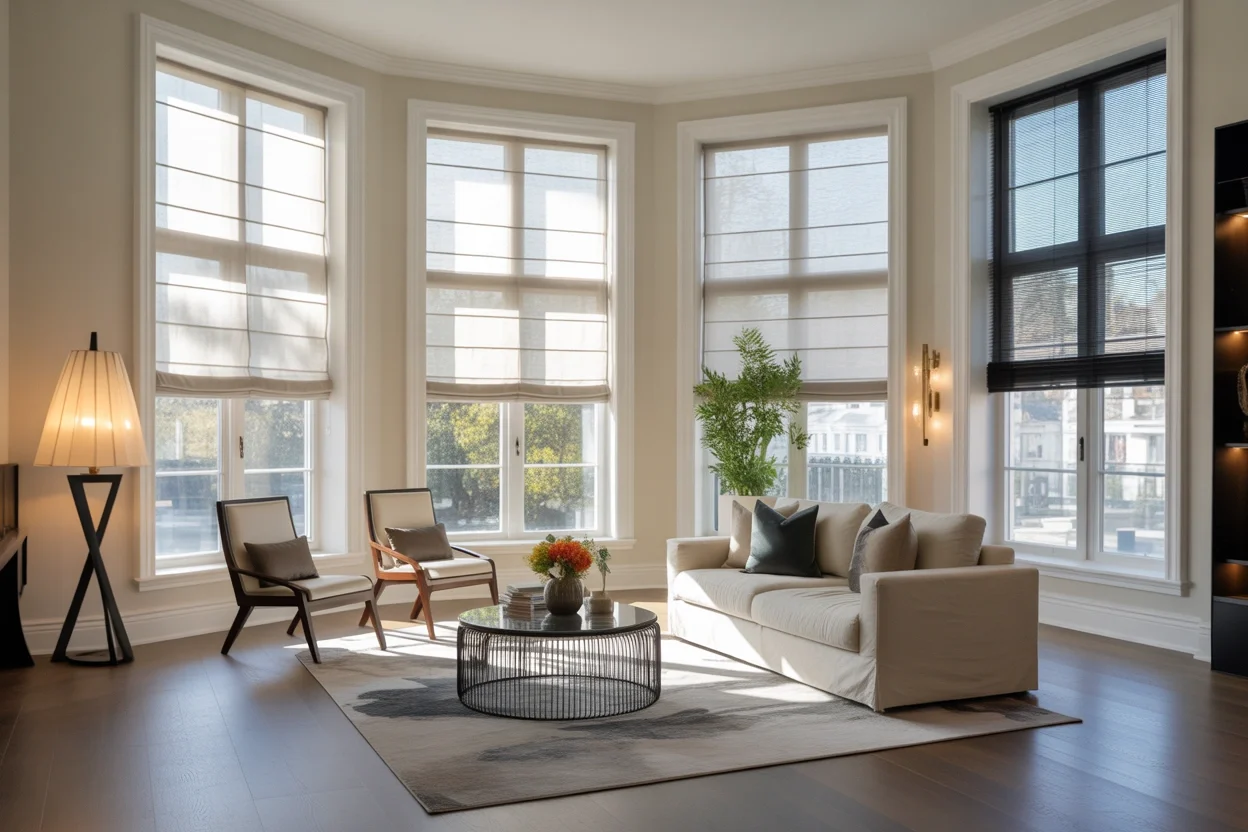
Large windows are gorgeous until you realize you’re living in a fishbowl with zero privacy. I learned this the hard way when I moved into my place with floor-to-ceiling windows—stunning views, but my living room became neighborhood entertainment. After months of testing different window treatment ideas for large windows and spending way too much money on mistakes, I finally figured out what actually works. Let me save you the trial-and-error headaches.
Why Large Windows Need Special Treatment
Large windows present unique challenges that standard window treatments can’t handle. You’re dealing with more square footage, heavier materials, and structural considerations that don’t apply to regular windows. According to Architectural Digest, proper window treatments can reduce energy costs by up to 25% while enhancing your home’s aesthetic appeal.
The right window treatment ideas for large windows solve multiple problems simultaneously—privacy control, light management, temperature regulation, and style enhancement. Skip the cheap solutions or you’ll end up replacing everything within a year like I did.
Size matters here. Standard curtain panels look ridiculous on 10-foot windows, and flimsy blinds will sag under their own weight. You need treatments designed specifically for the scale and weight requirements of oversized windows.
1. Floor-to-Ceiling Curtains for Drama
Creating Visual Height
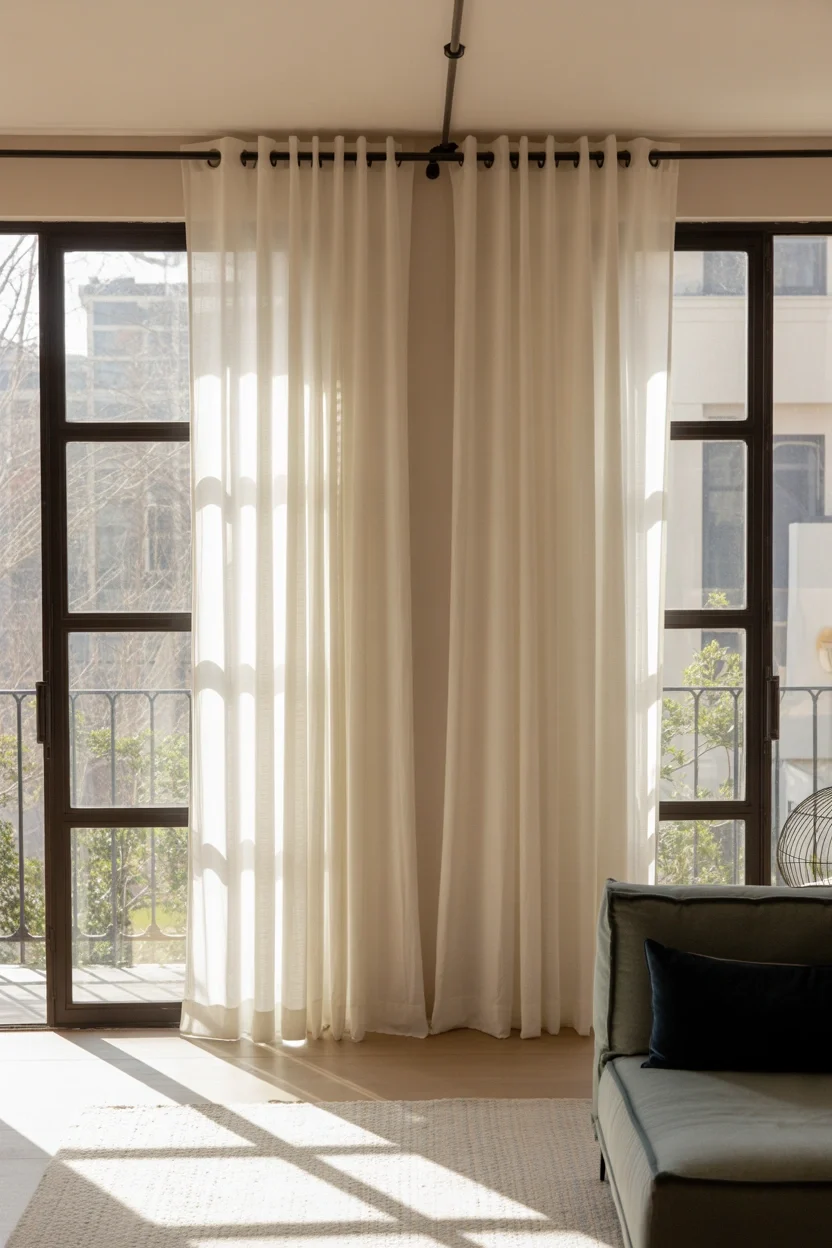
Floor-to-ceiling curtains are my number one recommendation for large window treatments. They create dramatic vertical lines that make your space feel taller and more elegant. Mount your curtain rod as close to the ceiling as possible—not at window height—and let those panels kiss or puddle on the floor.
I made the mistake of hanging curtains at window height first. The difference when I moved them up was incredible. Your eye follows the line all the way up, making 8-foot ceilings feel like 10 feet. Choose curtains at least 1.5 times the width of your window for proper fullness—skimpy panels ruin the effect.
Color strategy matters. Choose curtains that complement your wall color rather than contrasting sharply. This creates seamless flow and prevents your room from looking chopped up. Save bold colors for accent pillows and artwork.
Fabric Selection Tips
For large window treatments, fabric weight becomes crucial. Lightweight fabrics won’t hang properly on tall windows—they’ll billow and look messy. I use medium to heavy-weight fabrics like velvet, heavyweight linen, or lined cotton for the best drape.
Lining your curtains isn’t optional for large windows. It improves insulation, blocks light better, and helps the fabric hang correctly. Blackout lining works great for bedrooms while thermal lining helps with energy efficiency in any room.
2. Layered Window Treatments for Flexibility
The Power of Multiple Layers
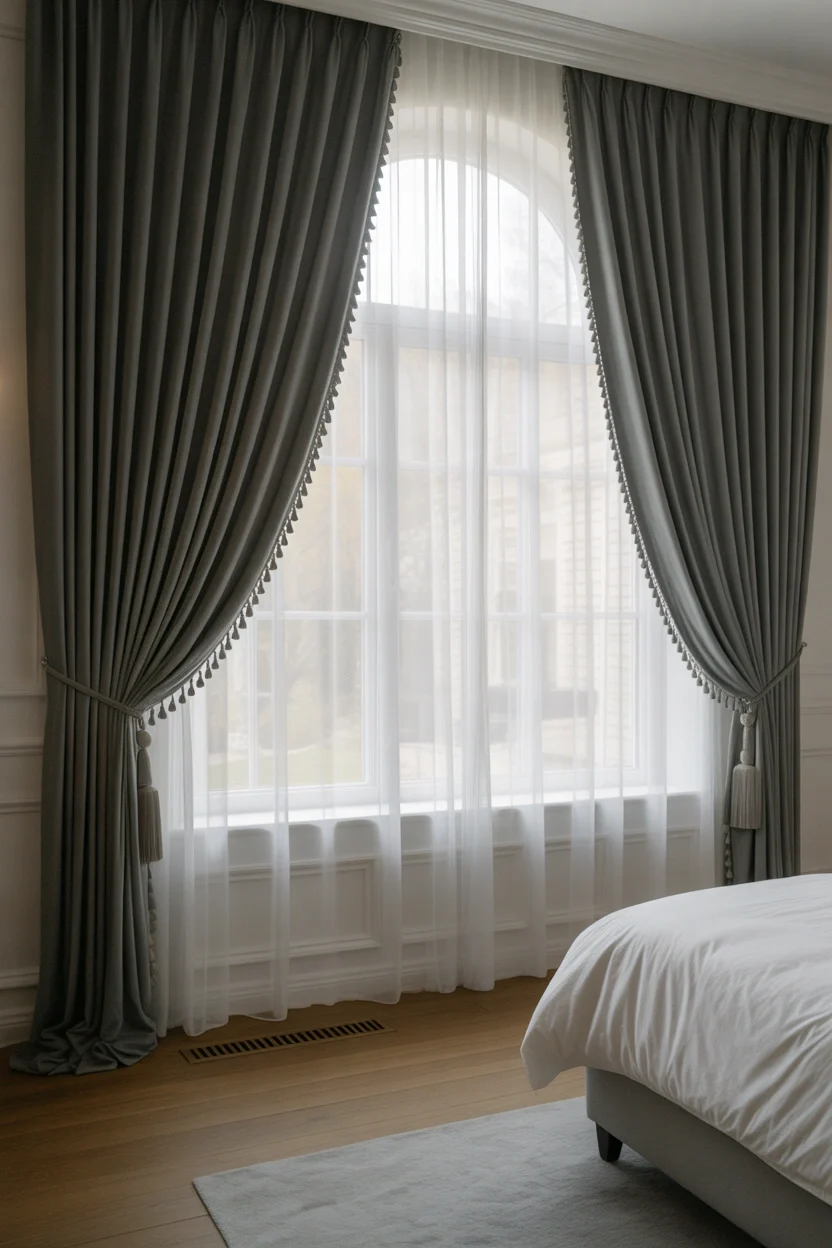
Why settle for one window treatment when you can have several working together? Layering gives you complete control over light and privacy while adding serious visual interest. My favorite combination uses sheer curtains behind heavier drapes.
During the day, the sheers provide soft, filtered light and daytime privacy. Come evening, close the outer layer for complete coverage. It’s like having a dimmer switch for your windows—pure genius. According to Better Homes & Gardens, layered treatments are among the most popular choices for modern homes.
Ever wondered why high-end hotels always look polished? They layer window treatments like professionals. You can achieve the same effect at home with proper planning and installation.
Mixing Textures and Materials
Successful layering for large windows means mixing textures strategically. Try sheer linen with silk drapes, or bamboo shades with cotton curtains. The textural contrast creates depth and visual interest that single treatments can’t match.
I combine functional inner layers (for light control) with decorative outer layers (for style). Roman shades provide excellent function while decorative panels add softness and color. This approach gives you practical benefits without sacrificing aesthetics.
3. Motorized Blinds for Modern Convenience
Smart Home Integration
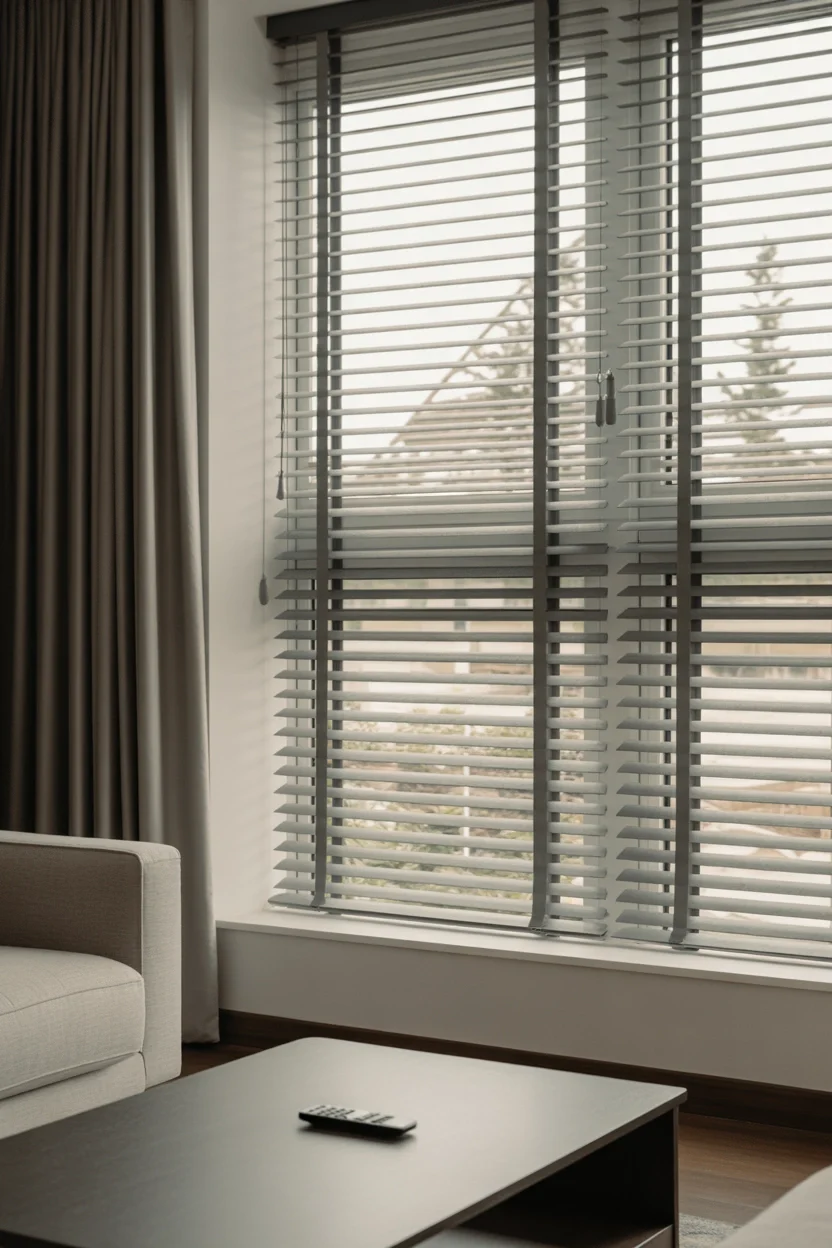
Motorized blinds are game-changers for large window treatments, especially hard-to-reach windows or multiple windows you want to control simultaneously. I was skeptical until I installed them in my home office—now I control everything from my phone while sitting on the couch.
FYI, these aren’t just about convenience. Motorized blinds help maintain consistent temperatures, protect furniture from UV damage, and improve home security by operating on schedules when you’re away. The technology has improved dramatically while prices have dropped.
The initial investment stings—expect to pay $300-800 per window depending on size and features. But the daily convenience and energy savings add up. Plus, they’re particularly brilliant for windows above staircases or in vaulted ceilings where manual operation is impractical.
Choosing the Right System
Not all motorized systems work the same way. Battery-powered options eliminate wiring but require periodic charging. Hardwired systems need professional installation but never run out of power. Solar-powered blinds work if your windows get sufficient sun exposure.
I recommend systems that integrate with smart home platforms like Alexa or Google Home. Voice control for window treatments feels futuristic and is incredibly practical when your hands are full.
4. Roman Shades for Sophistication
Style Variations
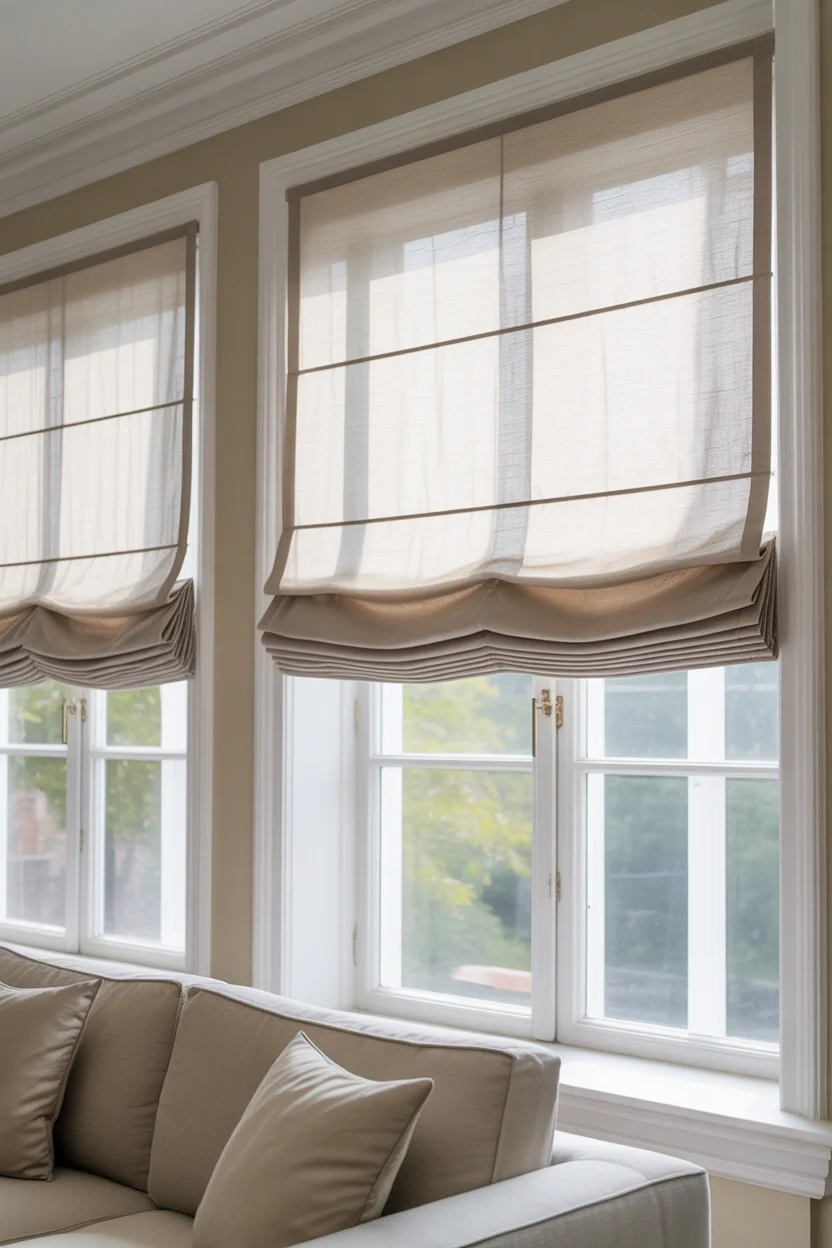
Roman shades bring warmth and sophistication to large windows without overwhelming your space. They fold up neatly when raised, giving unobstructed views when desired. I particularly love flat Roman shades for clean, modern looks or relaxed Roman shades for casual spaces.
Fabric choice determines the entire vibe. Linen adds texture, silk creates elegance, cotton provides everyday durability. For large windows, you’ll want cordless or motorized operation—traditional cords look messy and create safety hazards.
Quick reality check: measuring is crucial with Roman shades. One inch off and your shade looks wonky. Don’t ask me how I know this. Hire a professional measurer if you’re not confident—it’s worth the $50-100 fee.
Installation Considerations
Large window Roman shades need proper support. Inside-mount shades work only if your window frame is deep enough and perfectly square. Outside-mount shades are more forgiving and can make windows appear larger by extending beyond the frame.
For windows over 72 inches wide, consider splitting them into two shades rather than one massive panel. Single large shades become too heavy and may not operate smoothly. Two coordinating shades look intentional and function better.
5. Modern Vertical Blinds
Beyond the Office Look
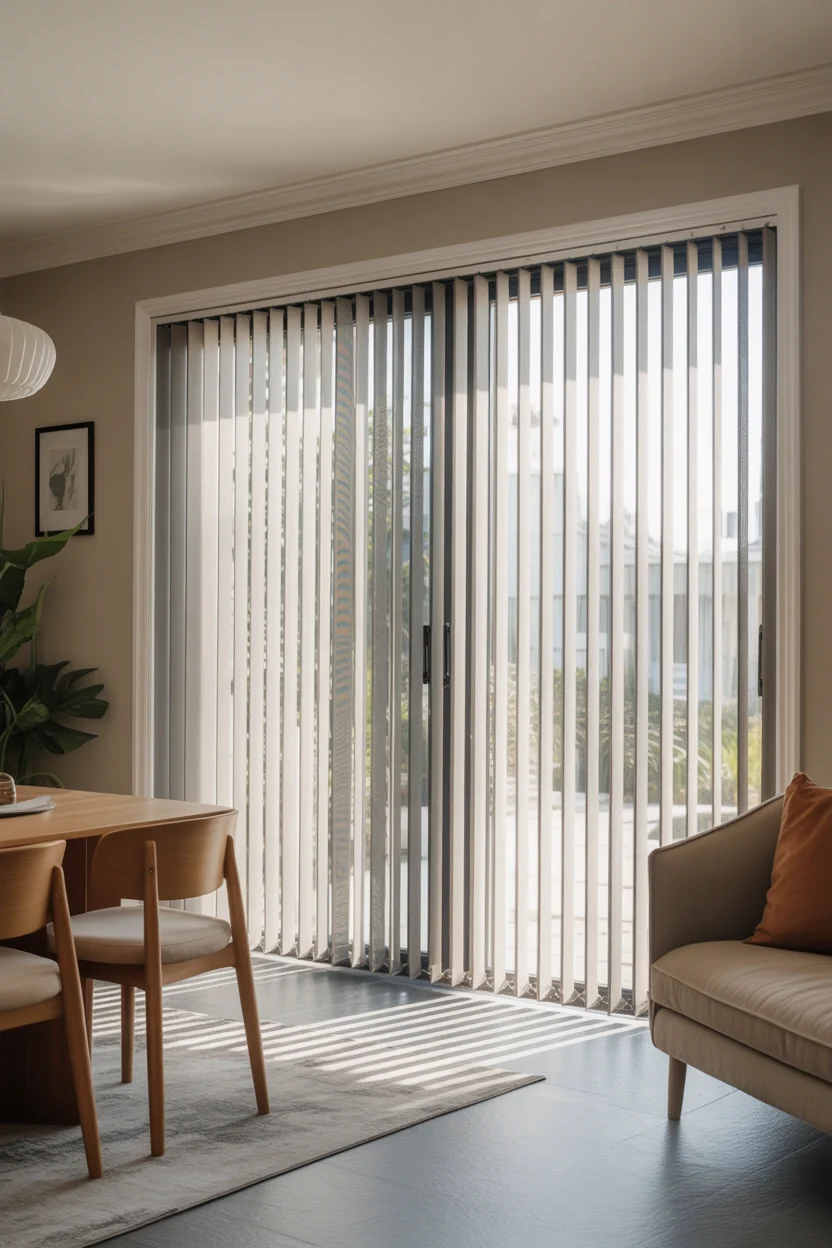
Before you dismiss vertical blinds, hear me out. Modern vertical blinds aren’t your grandmother’s office window treatments. Today’s options come in gorgeous fabrics, natural wood textures, and sleek materials that look nothing like the plastic versions from the 90s.
They’re particularly brilliant for sliding patio doors or extra-wide windows where traditional treatments become impractical. I’ve seen vertical blinds in rich wooden tones that look absolutely stunning against large picture windows. The key is choosing quality materials and wider slats.
Window treatment ideas for large windows need to be practical, and vertical blinds excel at covering massive expanses of glass. They stack neatly to one side, provide excellent light control, and handle high-traffic areas better than curtains.
Material Selection
Choose 3.5 to 4-inch wide slats rather than narrow ones—they look more modern and substantial. Materials matter enormously. Real wood or faux wood adds warmth, fabric slats soften the look, and PVC works for high-moisture areas like bathrooms.
Avoid stark white unless that’s your specific design goal. Neutral tones, warm woods, or subtle colors integrate better with most decor styles. The right color makes vertical blinds look intentional rather than like a default choice.
6. Panel Track Systems for Contemporary Spaces
Sliding Panel Design
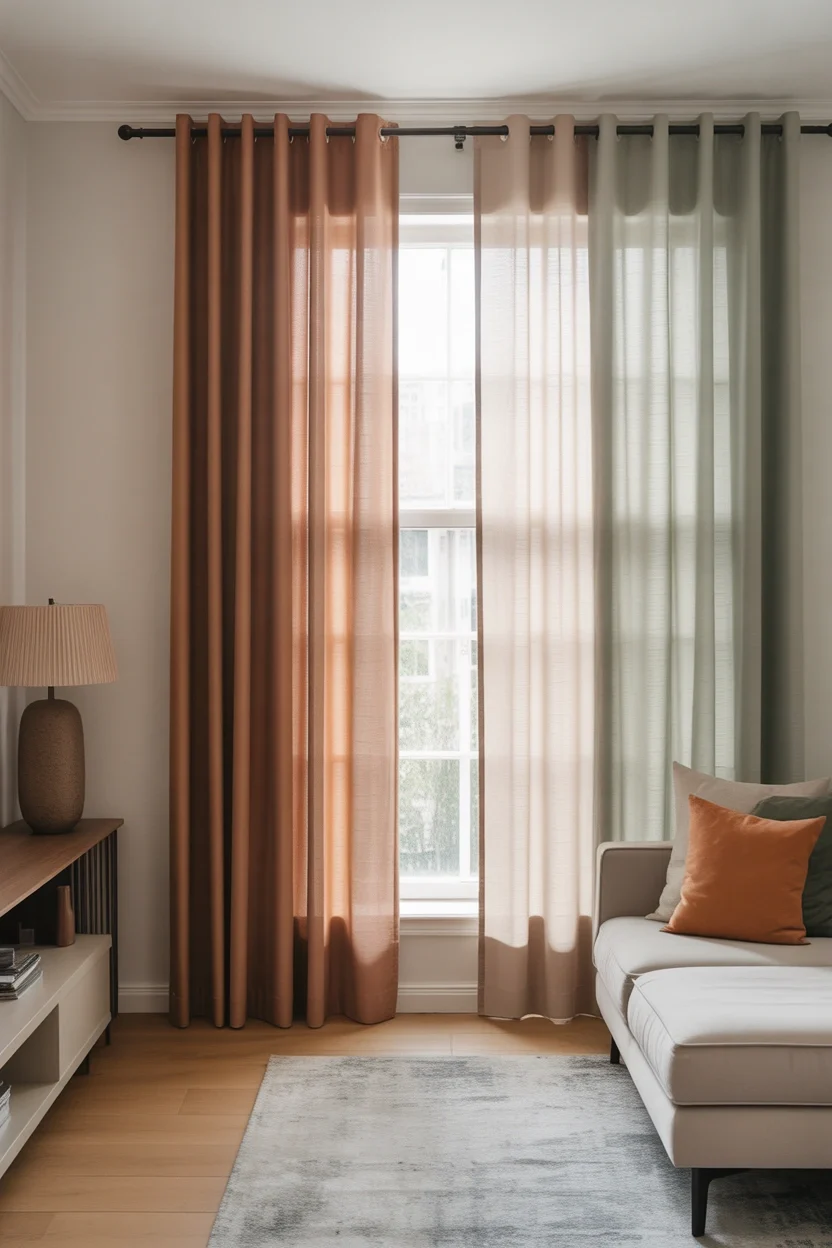
Panel track systems function like sliding wall art for your windows. These flat fabric or material panels slide along tracks, perfect for contemporary spaces with large windows or sliding doors. I installed these in my friend’s minimalist living room and they transformed the entire aesthetic.
You can create custom patterns by mixing different colored panels or even incorporate photographs or artwork into the design. This window treatment idea works particularly well for modern, industrial, or Asian-inspired interiors.
They’re incredibly practical for large sliding doors—much more elegant than traditional vertical blinds. Panels stack neatly to one side or split in the middle, giving you flexibility in how you access your windows or doors.
Customization Options
The beauty of panel tracks lies in customization. Choose sheer panels for filtered light, blackout panels for complete darkness, or mix both for layering. You can even create panels that match your wallpaper or artwork for a cohesive design statement.
For extra-wide windows, use 3-6 panels depending on coverage needs and your desired look. More panels create fuller coverage and more design flexibility. Fewer panels work for minimalist aesthetics where you want clean lines.
7. Plantation Shutters for Timeless Appeal
Investment-Grade Quality
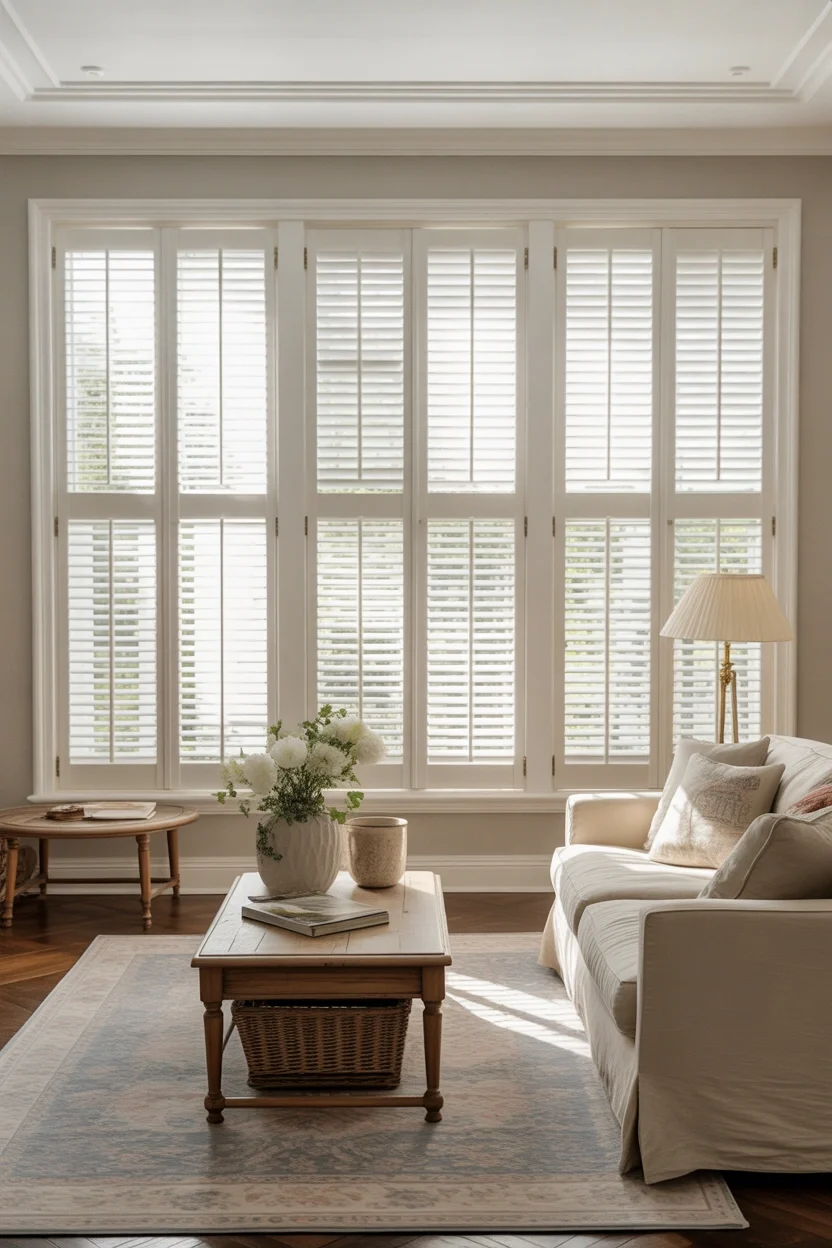
Plantation shutters are the investment pieces of window treatments for large windows. They’re expensive upfront—expect $20-45 per square foot—but they add serious value to your home and last decades with minimal maintenance.
I love how shutters provide precise light control while maintaining classic, timeless appeal. The wider louvers (3.5 to 4.5 inches) work best with large windows—they’re more proportional and easier to clean than narrow slats. According to Houzz, plantation shutters can increase home resale value.
Real talk: custom shutters can cost as much as a small car for multiple large windows. But they’re worth it if you’re planning to stay in your home long-term. They’re also excellent for noise reduction and insulation.
Material Choices
Real wood shutters look beautiful but work best in low-moisture areas. Faux wood or composite materials handle humidity better and cost less while still looking authentic. I use faux wood in bathrooms and kitchens, reserving real wood for living areas and bedrooms.
White is classic, but don’t overlook stained wood or painted colors. Shutters in rich espresso or warm honey tones add character and warmth. Match them to your trim color for cohesive design or make them a contrasting feature element.
8. Natural Bamboo and Wood Blinds
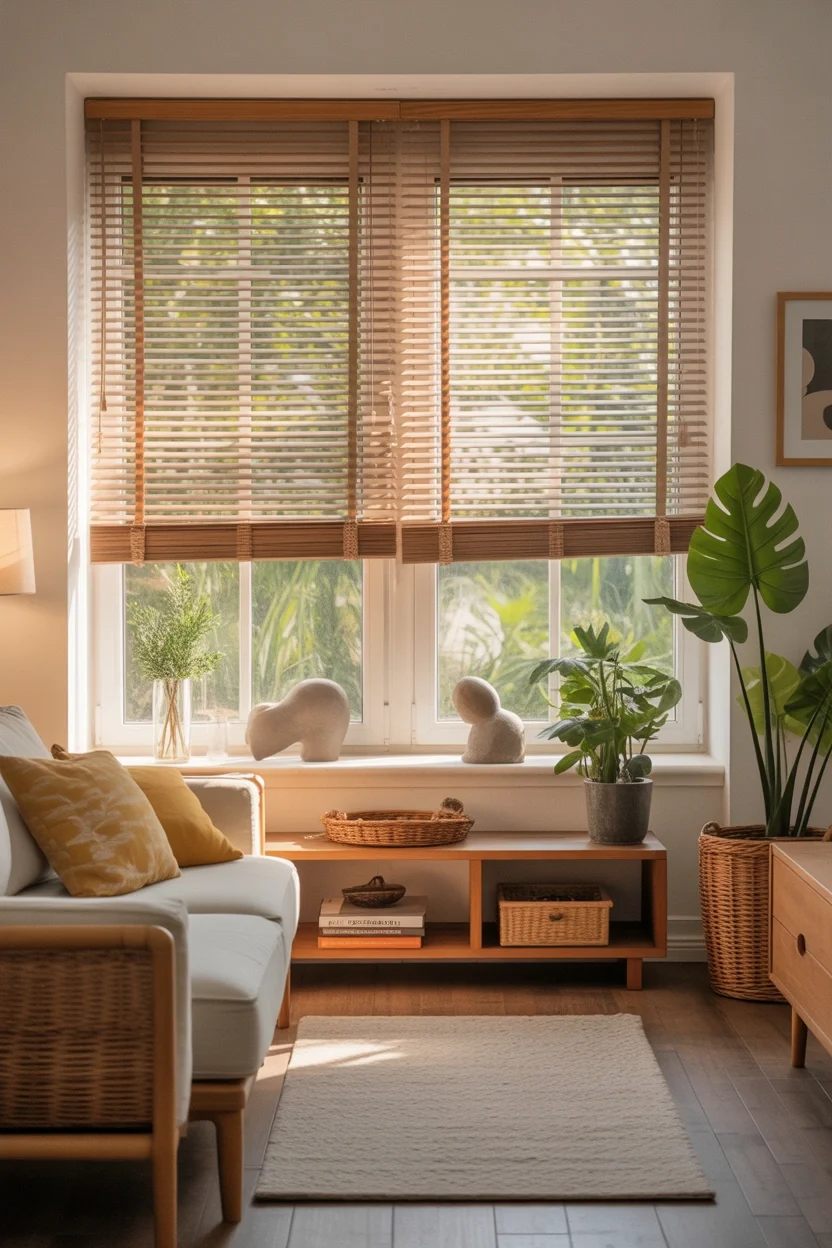
Bringing Nature Inside
Natural materials bring warmth and texture to large windows without competing with your view. Bamboo blinds work beautifully in casual, relaxed spaces while real wood blinds suit more formal settings. Both are excellent window treatment ideas for large windows on a moderate budget.
The key is proper sizing. Larger windows need wider slats to look proportional—I typically recommend 2-inch slats for most large windows, though 2.5-inch works for really massive ones. Narrow slats look busy and cheap on oversized windows.
Bonus: bamboo and wood blinds are relatively affordable compared to shutters or custom drapery. You get good light control and some privacy while maintaining natural warmth. They pair beautifully with sheer curtains for a layered look.
Maintenance and Durability
Natural wood treatments require care. Keep them away from moisture-prone areas unless treated with waterproof sealants. Dust them weekly with a microfiber cloth or vacuum attachment to prevent buildup in the slats.
Faux wood blinds offer the look of real wood with better durability and moisture resistance. They’re perfect for large windows in kitchens, bathrooms, or humid climates where real wood might warp or fade.
9. Sheer Curtains for Light and Airiness
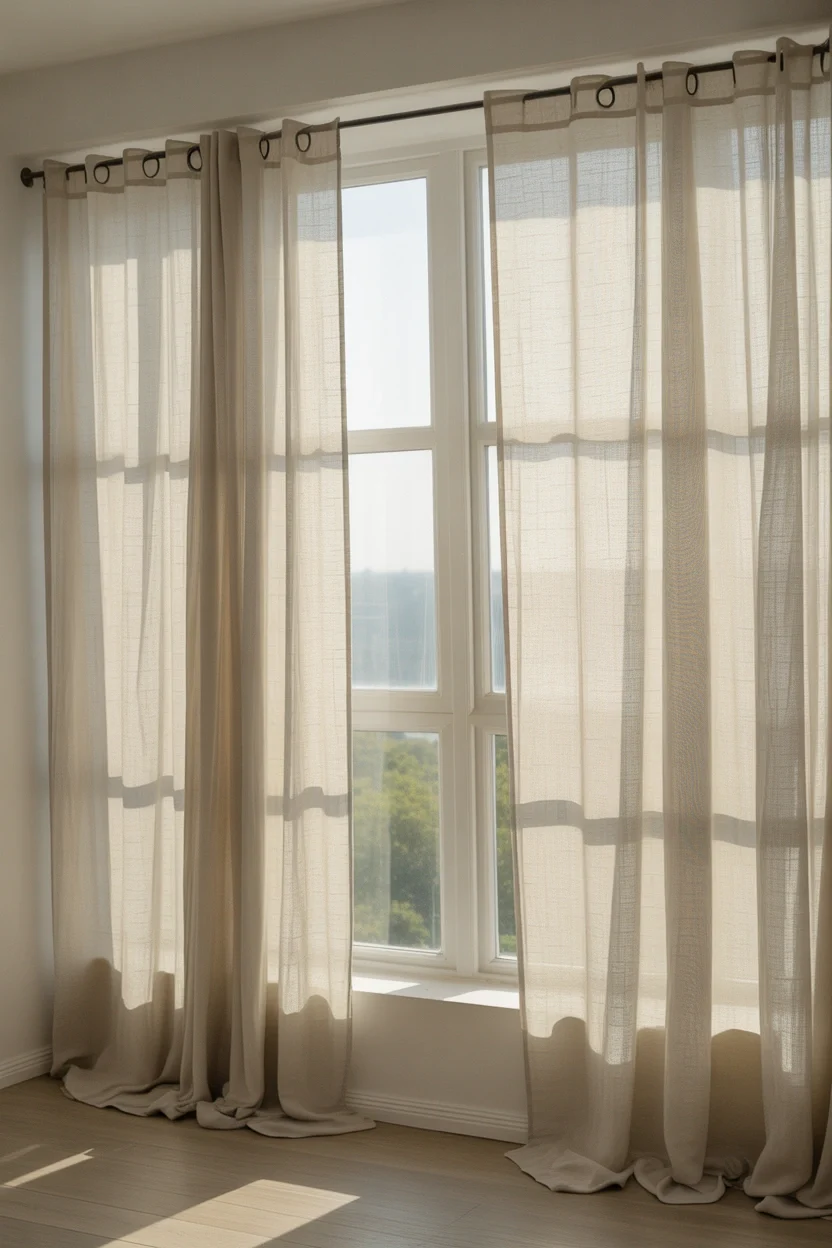
Maximizing Natural Light
Sometimes less is more with window treatment ideas for large windows. Sheer curtains soften harsh light while maintaining your connection to the outdoors. I’m obsessed with white linen sheers—they add movement and texture without blocking precious natural light.
They’re perfect for windows with gorgeous views you don’t want to hide. The gentle filtering effect creates beautiful, diffused light throughout your room without the harsh glare of unfiltered sun. Your plants and skin will appreciate the UV protection.
Just remember: sheers offer minimal privacy during the day and almost none at night with interior lights on. They work best in areas where privacy isn’t a concern or as part of a layered treatment system with heavier outer curtains.
Styling Sheer Panels
For large windows, go extra wide with sheers—aim for 2 to 3 times the window width for beautiful, full gathers. Under-buying on width is the most common mistake I see. Skimpy sheers look sad and don’t provide the soft, romantic effect you’re after.
Consider floor-to-ceiling installation even with sheers. The vertical lines create elegance and make your room feel more spacious. White or cream works everywhere, but don’t be afraid of subtle colors like pale blue or soft gray for added interest.
10. Cornice Boards for Architectural Interest
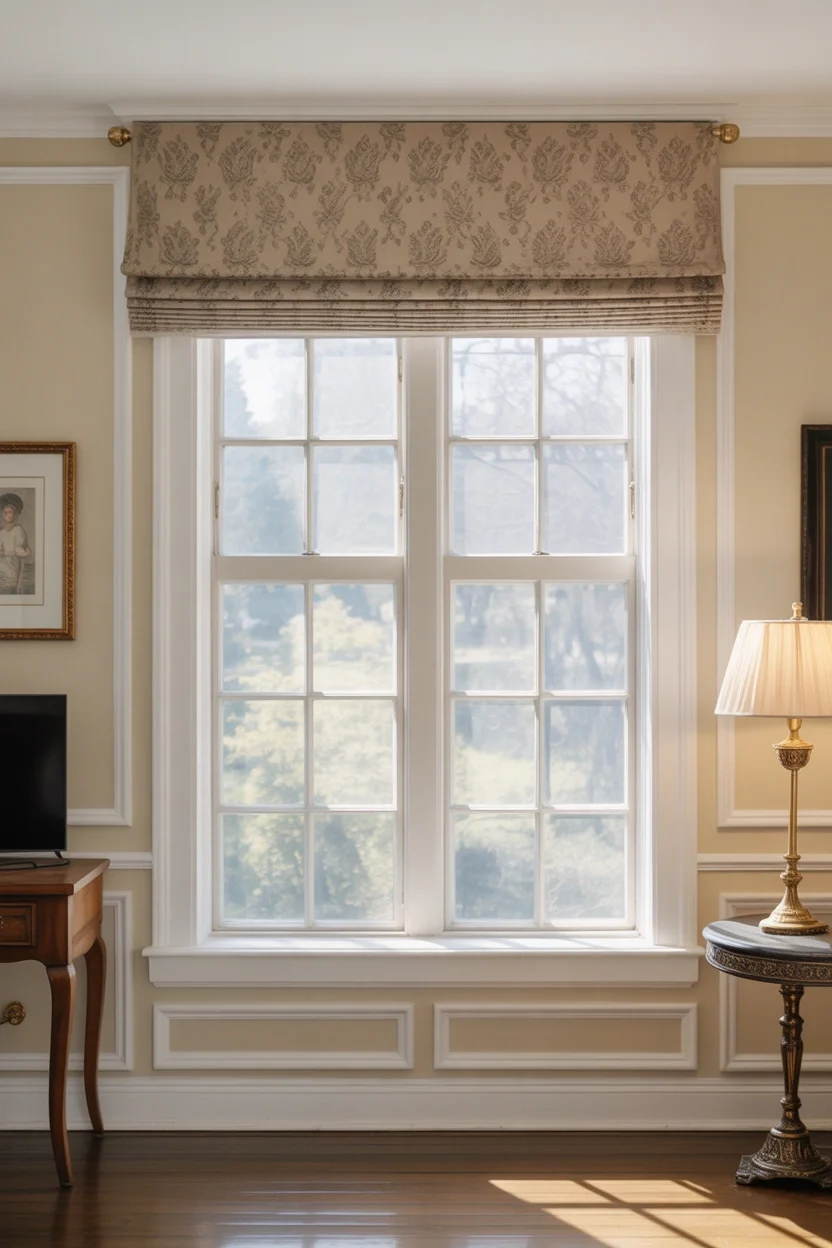
Classic Treatment Revival
Cornice boards are making a serious comeback in window design. These structured toppers add architectural interest and can make your windows appear larger than they actually are. I love how they create a finished, custom look without the expense of built-ins.
You can upholster cornice boards in fabric coordinating with your room or paint them to match your trim. For large windows, sized correctly, cornice boards draw the eye upward and add substantial visual weight without blocking light.
Pro tip: make your cornice board wider than your window opening and mount it several inches above the frame. This creates the illusion of larger windows and taller ceilings—it’s basically architectural magic.
DIY vs. Professional
Simple cornice boards are DIY-friendly if you’re handy with basic tools. You’ll need plywood, padding, fabric, and a staple gun. However, for large windows, professional installation ensures proper support for the weight and guarantees straight, level mounting.
Pair cornice boards with other window treatments for complete coverage. I like them over Roman shades or blinds—the cornice hides the hardware while the functional treatment beneath provides light control.
11. Window Film for Privacy Without Darkness
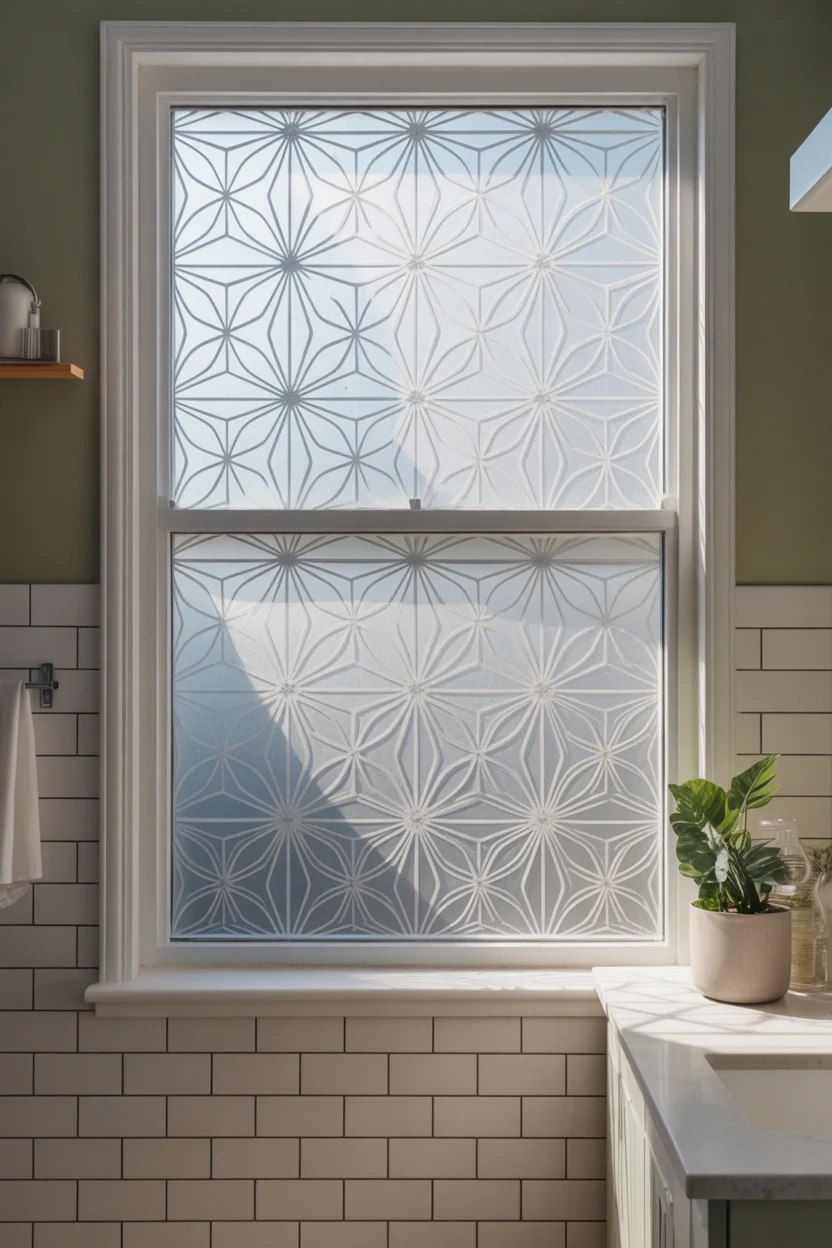
Modern Privacy Solutions
Window film offers privacy without sacrificing light—perfect for large windows in bathrooms or street-facing rooms. Modern films come in stunning patterns and textures that mimic frosted or etched glass at a fraction of the cost.
I used decorative film on my kitchen windows, and guests always ask if it’s custom glass work. The film provides daytime privacy while still allowing beautiful natural light. It’s also excellent for reducing UV damage to furniture and flooring.
The best part? It’s removable if you change your mind later, making it perfect for renters. Installation is relatively easy for DIYers, though professional application ensures bubble-free results on large windows.
Design Options
From subtle frosted effects to bold geometric patterns, window film styles suit every aesthetic. For large windows, I recommend simpler patterns that won’t overwhelm your space. Save complex designs for smaller accent windows.
Film also provides energy efficiency benefits by reducing solar heat gain in summer. Some films block up to 99% of UV rays while maintaining clear views. For more window treatment inspiration, check out home decor ideas at Elle Decor.
12. Budget-Friendly Cafe Curtains
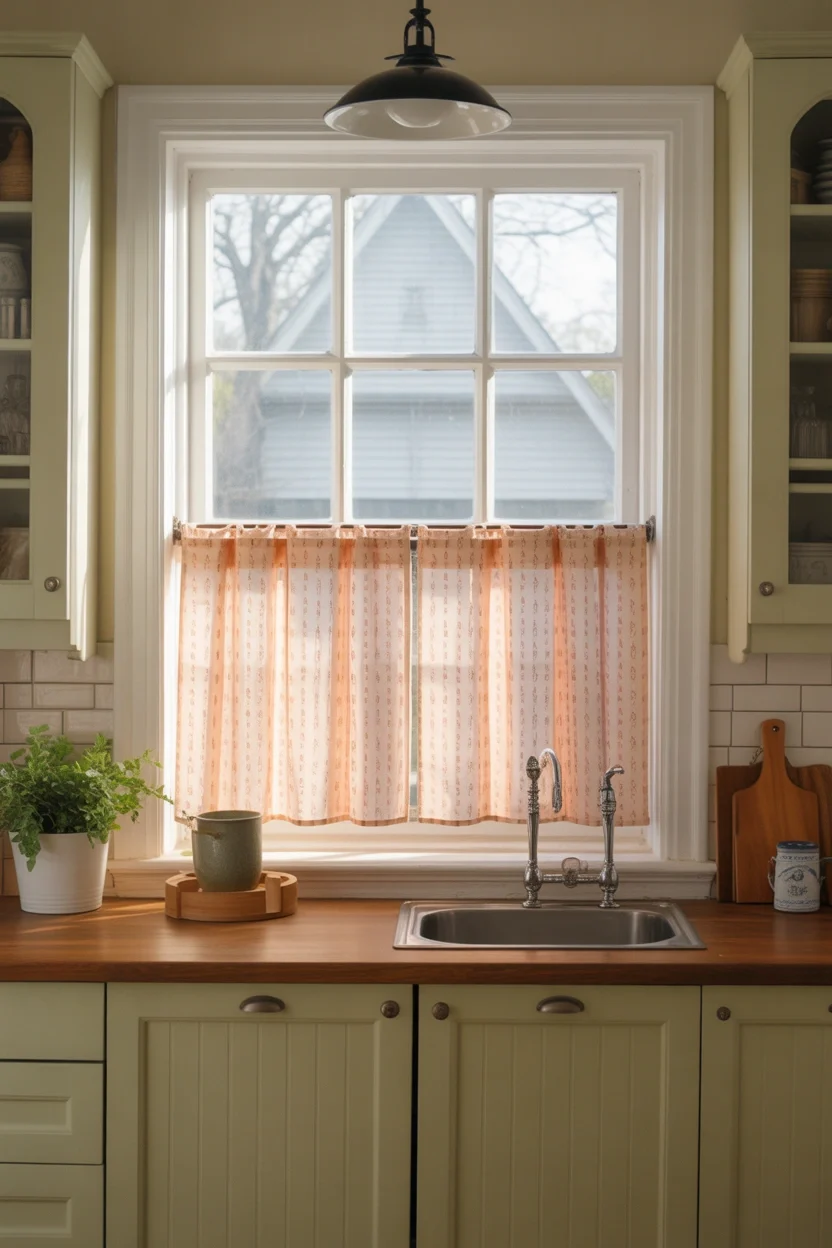
Casual Charm
Cafe curtains offer a charming, casual solution for large windows where you want privacy at eye level but still want light from above. I particularly love this approach for kitchen windows over sinks or in breakfast nooks.
You get privacy while cooking but still benefit from all that beautiful natural light streaming in from the top portion of the window. Choose fun patterns or colors that reflect your personality—this is where you can really play with design.
For large windows, extend cafe curtains to cover the bottom two-thirds of the window, leaving the top third open. This balances privacy needs with light access beautifully.
Installation Tips
Cafe curtains need a rod mounted at the midpoint of your window—typically 24 to 36 inches from the sill depending on window height. Use a tension rod for damage-free installation or a permanent rod for better weight support.
Pair cafe curtains with a valance or cornice board at the top of the window for a finished look. This combination is one of the most budget-friendly window treatment ideas for large windows while still looking intentional and stylish.
13. Valances and Swags
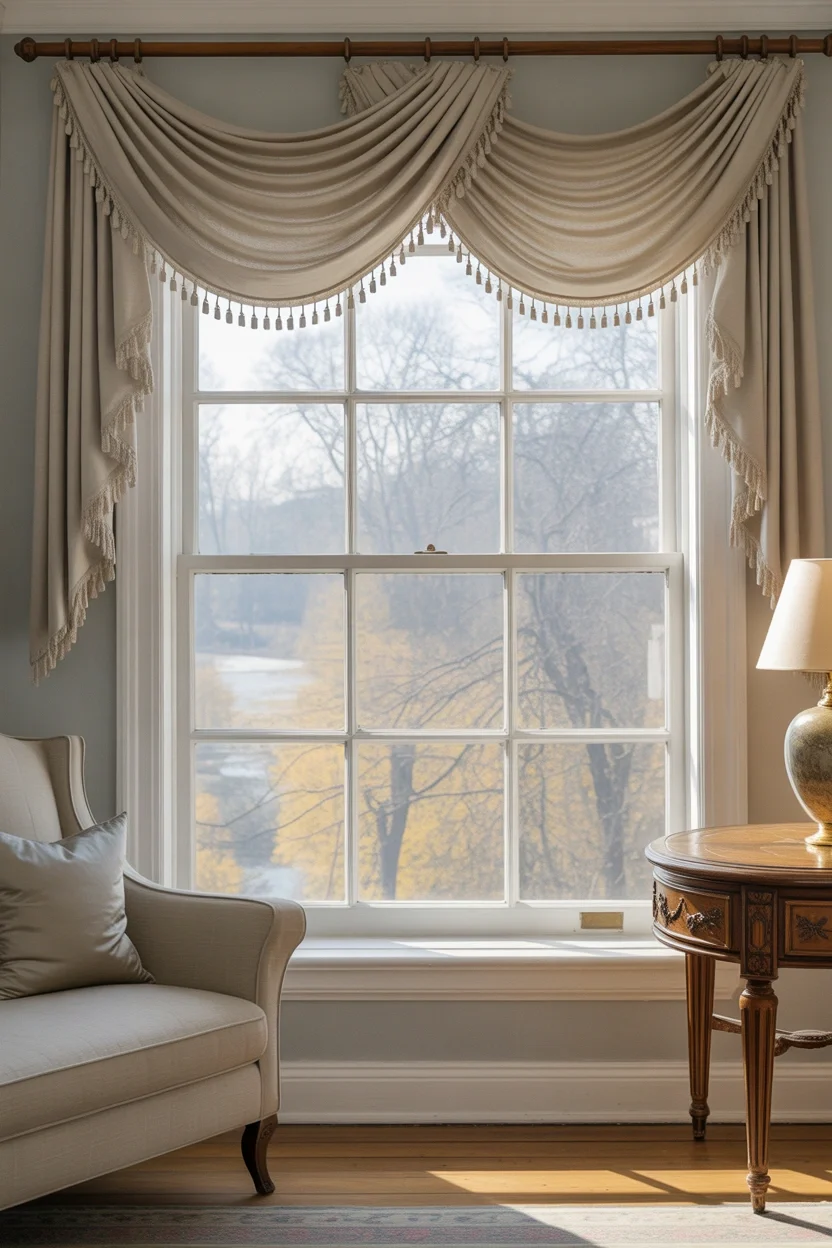
Sometimes you want to frame your view rather than cover it. Valances and swags add softness and color without blocking your gorgeous windows.
I’m not talking about fussy, over-the-top treatments here. Modern valances can be sleek and simple, just adding a touch of color or pattern at the top of your window.
They work particularly well when combined with blinds or shades for times when you need more coverage.
14. Sliding Barn Door Style Shutters
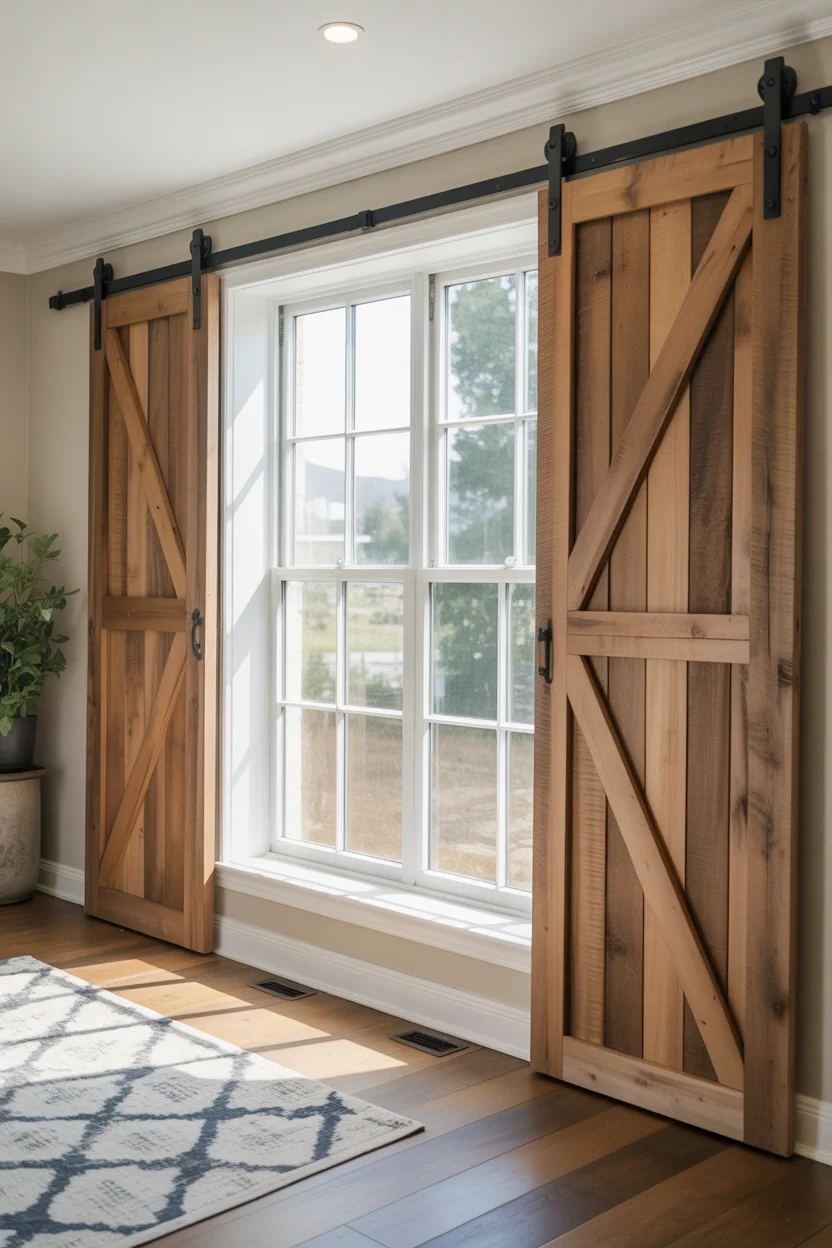
For something completely different, consider sliding barn door shutters. They’re functional art that can completely cover large windows or slide away entirely.
I installed these in a client’s farmhouse-style living room, and they became the focal point of the entire space. You get complete light control when closed and a stunning architectural feature when open.
They work particularly well with rustic, industrial, or modern farmhouse design styles.
15. Custom Drapery Hardware as a Statement
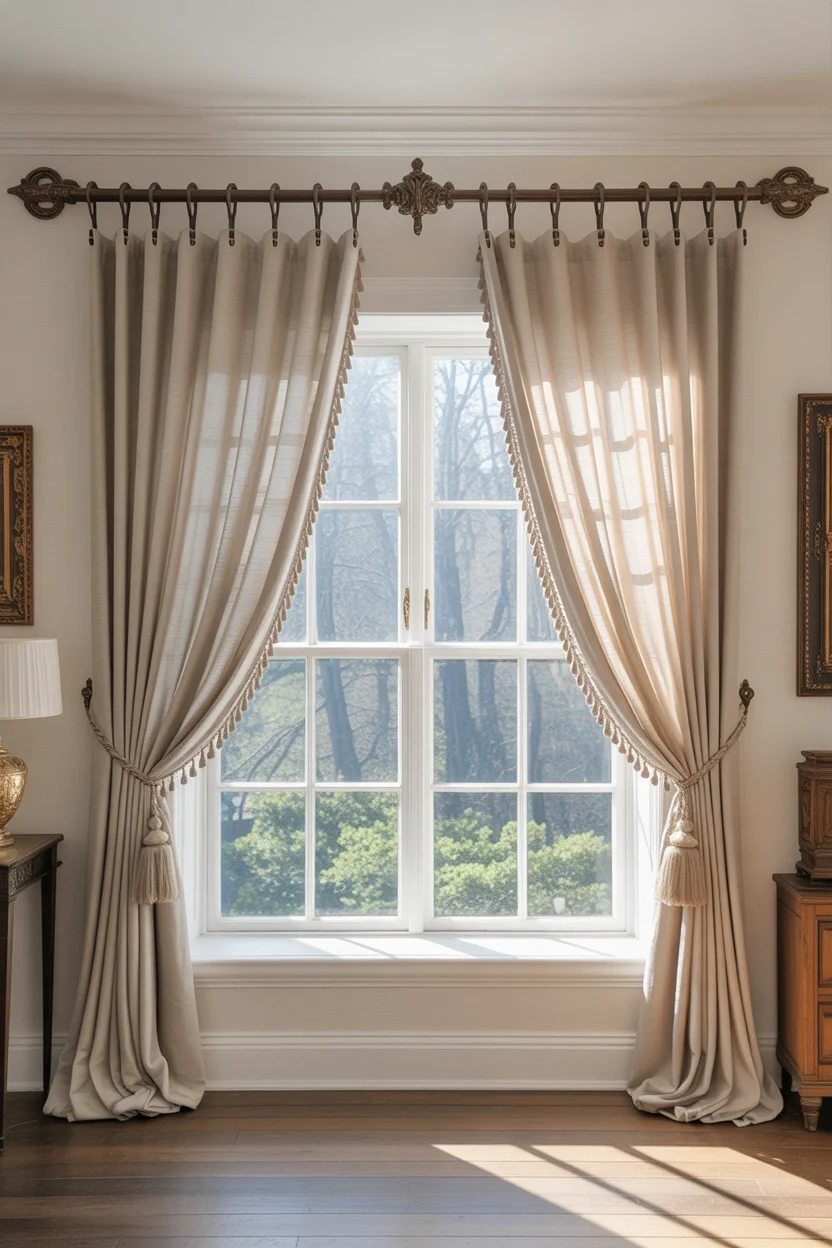
Hardware as Design Feature
Sometimes the hardware makes the window treatment. Oversized curtain rods, unique finials, and interesting brackets can transform simple curtains into stunning design features. IMO, this is where you can really let your personality shine.
For large windows, scale up your hardware proportionally. A skinny rod looks ridiculous on a 10-foot window. Choose rods at least 1.5 to 2 inches in diameter—they’ll support the weight better and look more substantial.
I’ve seen everything from vintage boat oars used as curtain rods to sleek steel cables for modern industrial looks. Don’t underestimate the power of beautiful hardware—it’s the jewelry of window treatments.
Material and Finish Selection
Brass and bronze bring warmth, brushed nickel or chrome read modern, black creates drama, and natural wood adds organic texture. Match your hardware finish to other metals in your room (light fixtures, cabinet pulls) for cohesive design.
For particularly heavy curtains on large windows, invest in center support brackets to prevent sagging. Nothing ruins the look faster than a drooping rod that can’t support the weight.
Making the Right Choice for Your Space
Assessing Your Needs
So how do you choose from all these window treatment ideas for large windows? Start by evaluating your lifestyle needs:
Privacy concerns: How much privacy do you need, and at what times of day?
Light control: Do you want to block light completely or just filter it?
Maintenance: Are you willing to clean complex treatments, or do you prefer low-maintenance options?
Budget: Be realistic about costs, including professional installation.
Style: What matches your existing decor and personal taste?
I always recommend living with your windows for a few weeks before making final decisions. Notice how light changes throughout the day and what bothers you most about the current situation. This observation period prevents expensive mistakes.
Professional vs. DIY Installation
For large windows, professional installation often makes sense. These treatments are heavy, require precise measurements, and need proper structural support. One installation mistake can ruin expensive custom treatments.
That said, some options are DIY-friendly if you’re handy—cafe curtains, window film, and basic curtain panels on rods. Save professional installation dollars for complex treatments like motorized blinds, plantation shutters, or multi-layer systems.
Final Thoughts
Large windows are a luxury that deserves thoughtful treatment. Whether you choose dramatic floor-to-ceiling curtains, sleek motorized blinds, or classic plantation shutters, the key is selecting window treatment ideas for large windows that enhance your space rather than overwhelming it.
Remember, there’s no rule saying you must treat all your large windows identically. Mix and match based on each room’s specific needs and your personal style preferences. A bedroom needs different privacy and light control than a living room.
The best window treatment is the one that makes you smile every time you enter the room. Trust your instincts, invest in quality materials, and don’t be afraid to take some design risks. That’s what transforms a house into a home that reflects your personality.
Start with the window that bothers you most, perfect that treatment, then move to the next. You don’t need to tackle everything at once. Gradual improvements let you learn what works in your specific space and spread costs over time.